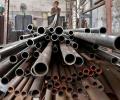
India's government is set to release its draft National Steel Policy for public consultation, aiming for over 600 million tonnes of steelmaking capacity and 500 million tonnes of consumption by 2047. The policy will also introduce a ~5,000-crore scheme to incentivise small steel producers for carbon emission reduction and address challenges like raw material availability and technological dependence.

State-run Oil and Natural Gas Corporation (ONGC) has approved the development of a 1.75 million tonnes (mt) strategic petroleum reserve (SPR) in Mangaluru, a project deemed of national importance, with plans for broad commercial utilisation.

Tata Steel more than doubled its Indian capacity through acquisitions and expansion, strengthening cash generation as it pursued a costly restructuring of its European operations.
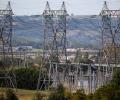
Coal inventories at nearly half of India's thermal power plants have fallen to less than 25 per cent of required stocks, with 80 out of 190 plants at critical levels as of September 24, prompting the Centre to invoke emergency provisions and consider mandating imported coal usage.

India's cement industry is on the brink of an oversupply situation as aggressive capacity expansion by major players is set to outpace demand growth over the next two financial years, potentially leading to pricing pressures and moderated utilisation rates.

Mahindra has launched the Thar OG, an upgraded version of its popular SUV, built on a new M Glyde 4G platform with advanced features like Frequency Dependent Damping and Electric Power Steering, while retaining an accessible starting price of 10.32 Lakh.

India is well-stocked with inventories of crude oil and key petroleum products, including petrol, diesel, and aviation turbine fuel (ATF), to deal with short-term disruptions as the war intensifies in West Asia, Union Minister of Petroleum and Natural Gas Hardeep Singh Puri said on Tuesday.

The new Tata Aeris, a sub-compact sedan, which replaces the Tigor, promises enhanced features, superior ride quality, and advanced technology.

State-owned refiners Bharat Petroleum Corporation Ltd (BPCL) and Hindustan Petroleum Corporation Ltd (HPCL) have reported substantial losses for the first quarter of financial year 2026-27 (Q1FY27), primarily driven by a sharp increase in crude oil prices exacerbated by the ongoing West Asia crisis and suppressed marketing margins on petroleum products.

Tata Steel plans to invest approximately Rs 20,000 crore in capital expenditure during the current financial year (FY27), a significant increase from the previous year, with 60 per cent of this allocation directed towards its India business for expansion, new technologies, and sustainability.

Union Steel Minister HD Kumaraswamy has urged the Indian steel industry to adopt advanced technologies like AI, Machine Learning, and IoT to enhance global competitiveness and productivity. Speaking at a Chintan Shivir, he highlighted that digitalisation is crucial for achieving ambitious steel capacity targets by 2035 and addressing challenges such as operational efficiency, decarbonisation, and export competitiveness. The minister also emphasised how technology can improve safety and reduce downtime in steel plants.

Adani Group Chairman Gautam Adani announced a capital expenditure programme of over 2 trillion for Adani Power, aiming for 45 gigawatts (Gw) capacity in five years, including a significant entry into nuclear power with a target of 10 Gw by 2035 through Adani Atomic Energy.

India's peak power demand is projected to hit 270 GW this summer, surpassing last year's record of 250 GW.

India's fertiliser subsidy bill for the current financial year (FY27) is projected to increase by approximately 20% due to surging global prices, primarily driven by the West Asia crisis, a senior official confirmed. Despite this, retail prices for urea and di-ammonium phosphate (DAP) will remain unchanged, ensuring adequate supply for the kharif season.

India's sugar consumption is projected to fall by nearly 400,000 tonnes in the 2025-26 season, primarily due to the ongoing liquefied petroleum gas (LPG) shortage exacerbated by the West Asia conflict and unseasonably cool weather.

Amid the political push and pull, the Centre's decision to allow sugar exports and remove the 50 per cent duty on molasses exports has rekindled hope in the industry that more relief may follow.

'Exploration should be made easier and companies should be given operational flexibility.'
State-run Bharat Petroleum Corporation Ltd (BPCL) plans a significant capital expenditure of 25,000 crore for the financial year 2026-27, primarily for ongoing expansion projects. The company also stated that the recent 4-per-litre price hike in petrol and diesel has provided some financial relief amidst volatile crude oil prices and mounting losses.
Tata Steel is strategically positioned for growth, leveraging India's robust steel demand, significant cost transformation programmes, and favourable protectionist policies in the EU and UK. The company is expanding its India capacity and optimising operations in its European units to enhance profitability and reduce debt.
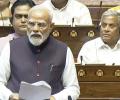
Prime Minister Narendra Modi addresses the Rajya Sabha, detailing India's strategies to navigate the global energy crisis sparked by the West Asia conflict, including securing diverse energy sources and expanding strategic oil reserves.

Billionaire Gautam Adani announced the Adani Group is transitioning to a three-layer organisational structure to flatten hierarchy and empower its frontline operations, aiming for faster decision-making and increased accountability.
The imposition of safeguard duty, an uptick in exports, and an increase in input cost are driving steel prices higher. The latest round of price increase took place on Friday, with some steel mills increasing hot-rolled coil (HRC) prices by ~500-750 a tonne, according to price reporting and market intelligence firm BigMint. HRC is a benchmark for flat steel.

Iran's ambassador to India, Mohammad Fathali, has described India as a "reliable and compassionate" partner while asserting Tehran's territorial authority over the Strait of Hormuz amidst ongoing regional tensions.

Quota-based duty concessions granted by India to New Zealand for apples, kiwifruit, and Manuka honey are linked to the delivery of agriculture productivity action plans committed by the island country under the free trade agreement.

There is no cause for concern, as the overall situation arising out of the crisis is firmly under control, the Centre informed while briefing political parties at the all-party meet.
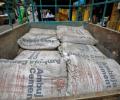
Investors have put money in Ambuja Cements shares as the cement major has moved to consolidate its operations. The Adani Group company has proposed to merge its subsidiaries ACC and Orient Cement into the parent entity.

You have to grow, and grow fast - that's the DNA of the JSW group, chairman Sajjan Jindal said as JSW Cement made its debut on the stock market mid-August. The remark captured not just the moment but also the momentum of JSW's growth story.

India's power sector CO2 emissions fell in H1 2025 for the first time in nearly 50 years (outside the pandemic), thanks to record renewable growth and lower coal use from cooler, wetter weather.
The Indian steel industry is faced with a paradox: Rising demand and falling prices. Demand continues to surge as user industries gather pace, with the World Steel Association projecting around 9 per cent annual growth for India over 2025 and 2026, the year domestic demand is projected to be almost 75 million tonnes (mt) higher than in 2020.
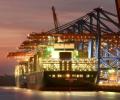
The government has identified 50 public-private partnership (PPP) projects worth over Rs 60,000 crore, significantly surpassing the original targets of the National Monetisation Pipeline, said Ports, Shipping, and Waterways Minister Sarbananda Sonowal at the Business Standard Infrastructure Summit on Thursday.
Tata Steel on Wednesday reported a 272 per cent year-on-year (Y-o-Y) jump in consolidated net profit, attributable to owners, at Rs 3,101.75 crore in the second quarter of 2025-26 (Q2FY26) led by higher sales volumes in India and planned cost takeouts across geographies.

Steel companies are witnessing margin pressures in Q2FY25 and this may persist until China sees growth recovery.
There is positive sentiment for Tata Steel on the basis of strong domestic demand, a turnaround of European operations and moderate valuations. A combination of capacity expansion, efficiency gains, higher asset utilisation, and improved operating leverage may lead to margin expansions.

Adani Power on Thursday posted a 12 per cent decline in consolidated net profit to Rs 2,906 crore in the September quarter, driven by a rise in expenses. It had clocked a net profit of Rs 3,297.52 crore in the July-September period of the preceding 2024-25 financial year, the Adani Group entity said in an exchange filing.

'With the deployment of a higher degree of mechanisation, awarding contractual mining to MDOs and operational efficiency, we feel confident of achieving the desired target.'

Ambuja Cements' announcement that it would acquire Hyderabad-based Penna Cement Industries could be the Adani Group company's first step for wider inorganic expansion, according to analysts.
Tata Steel's UK operations, which have largely been a struggle since the acquisition, are expected to turn earnings before interest, tax, depreciation, and amortisation (Ebitda)-positive this financial year (2025-26/FY26) and possibly profitable by the next. Responding to shareholder queries at Tata Steel's annual general meeting, Tata group chairman N Chandrasekaran said, "We expect the UK to perform much better this year compared to last year - it will definitely be Ebitda-positive."

Tata Steel's consolidated net profit more than doubled to Rs 2,007.36 crore during the June quarter, on account of "increase in net steel realisations and the planned cost-takeouts" across geographies. The Tata Group entity had posted a net profit of Rs 918.57 crore in the year-ago period.
'The steel industry has a multiplier effect on direct and indirect employment, national security on the supply chain, technology access etc.'
On June 30, mining and metals giant Vedanta, announced that it had decided to initiate a strategic review of its steel and steel-making raw material businesses. The review would begin immediately and evaluate a broad range of options, including but not limited to a potential strategic sale of some or all of the steel businesses, the company said in its stock exchange filing. The signs have been there - approaches had been made to steel players over the past year. Last December, Anil Agarwal, chairman Vedanta group, told Business Standard that the steel plant capacity was about 3 million tonnes (mt).
